
Pura Vida Organic Farm is a family-run organic farm dedicated to growing vegetables and fruits in a nature-friendly way. It is in the village of Akandzhievo, a small settlement surrounded by vineyards and forests in the western Thrace-Rhodope region, part of South-Central Bulgaria. The farm is situated just 100 kilometers from Sofia, the country’s capital, and 70 kilometers from Plovdiv, its second-largest city. Pura Vida Organic Farm exemplifies a project that combines regenerative tourism with sustainable agriculture and social initiatives. Central to its vision is the integration of nature, local culture, and the economy into one cohesive model.
Its creators, Valentina and Christian, aim to revive organic farming in Akandzhievo while creating a sustainable future for the community.
The story of Pura Vida Organic Farm began with the founders’ journey through South America, where they discovered the phrase “Pura Vida,” a popular Costa Rican greeting that translates to “clean life” or “a good life.” Inspired by its meaning, Valentina and Christian adopted it as the name of their farm to reflect their philosophy of living fully and harmoniously with nature. Their farm operates on 1.5 acres of greenhouse space, 3 acres of open gardens, 6 decares of vineyards growing the “Rkatsiteli” grape variety, and 40 decares of fields where single grain spelt is cultivated. The vegetable production relies on organic seeds, including traditional Bulgarian varieties preserved within the family for generations. One of the unique aspects of Pura Vida Organic Farm is its ability to combine agriculture with tourism. Visitors to the farm could learn about sustainable development while supporting the local economy. Valentina and Christian believe their work inspires people to reconnect with nature and participate in restoring ecosystems. Despite facing numerous challenges, they remain committed to their vision of creating a model of sustainable agriculture and tourism that benefits both the environment and the community. Their goal is to demonstrate how regenerative farming practices can restore ecosystems while creating a sustainable economy that supports farmers and visitors alike. Regeneration, for the owners, means restoring natural resources and ecosystems through farming practices that actively improve soil, water, and biodiversity. They avoid chemical stimulants and preservatives, opting instead for organic and sustainable methods. For instance, biohumus produced on the farm using red Californian worms is used for fertilization. Natural solutions combat pests: a nettle mixture tackles lice and whiteflies; a blend of water, fresh milk, and iodine fights blight on cucumbers and tomatoes; and a concoction of chilies, garlic, vinegar, and water helps repel stink bugs. These methods are integral to the farm’s daily operations and are shared with tourists and locals to promote awareness of sustainable practices. Additionally, green building techniques and the preservation of local traditions contribute to the farm’s regenerative philosophy.
A significant achievement for Valentina and Christian has been the regeneration of degraded lands surrounding the farm. By implementing regenerative farming techniques, they have enhanced biodiversity and improved the region’s quality of life. These efforts have also created new economic opportunities through eco-tourism, local production of regional goods, and traditional crafts. The local community has increasingly embraced organic farming and actively participates in the regeneration process. This journey has deepened founders understanding of sustainable development and reinforced the importance of preserving local culture, family connections, and natural resources. The interplay between nature, culture, and the economy is evident in the farm’s integration of local traditions into its tourist offerings. Educational programs and workshops showcase traditional farming methods and craft skills, enriching visitors’ experiences while boosting the local economy. This harmonious relationship demonstrates how these three aspects can coexist and mutually enhance one another.
Recognizing the need for a broader impact, Valentina and Christian have expanded their efforts beyond the local level. They actively educate tourists and the community about the global significance of regenerative practices. Collaboration with the local community is central to the farm’s success. This includes training programs, partnerships with local farmers and artisans, and providing opportunities for community involvement in farm projects. One notable example is the production of handicrafts sold to tourists. The farm also welcomes volunteers, offering them a chance to immerse themselves in its operations and share their experiences. Respect for local culture is evident in the farm’s tourism and social initiatives. Traditional Bulgarian dishes, courses on local crafts, cooking, folklore, and agricultural practices are integral to the farm’s activities. These efforts not only preserve but also promote the region’s cultural heritage. The path to establishing Pura Vida Organic Farm has not been without challenges. The initial development phase required overcoming resistance to new methods and skepticism about sustainable practices. Valentina and Christian persevered through education and demonstrations, gradually convincing the community of the benefits of regenerative farming. External factors such as adverse weather conditions, economic instability, and the COVID-19 pandemic have also posed difficulties. Despite these obstacles, the founders have remained resilient, prioritizing the quality of their produce over quantity and adapting to changing circumstances.
Their determination led to the expansion of the farm’s activities, including the opening of Guest House PURA VIDA in 2022. This guest house features four bedrooms, each accommodating up to four people, with a total capacity of 16 guests. Amid these challenges, Valentina and Christian have had many reasons to celebrate. One source of pride is the growing interest from local and international visitors, which has bolstered the local economy and raised awareness about sustainable agriculture. Another achievement is the children’s camps hosted at the farm, where young participants learn about fruits and vegetables, organic farming, and ecological balance.
These camps aim to instill an appreciation for sustainable practices from an early age, fostering future generations who value and protect the environment. The legacy of Pura Vida Organic Farm lies in its role as a model for regenerative tourism that integrates ecological, social, and economic principles. Valentina and Christian’s decision to leave successful careers in New York and return to Akandzhievo has created a lasting impact on the community. Future generations will remember the farm as a place that not only restores nature but also redefines economic and social realities for residents. The founders’ advice to others is to start with a clear vision and long-term strategy while remaining flexible and adaptable to real-world conditions.
They emphasize the importance of collaboration with local communities and understanding the connection between nature and economic activities. For them, regenerative tourism is more than a business; it is an opportunity to create a sustainable model that restores nature, supports the community, and offers unique experiences that foster a deeper connection with the environment.

The ENFORCE journey ended with its final Transnational Project Meeting in the city of Plovdiv, Bulgaria, hosted by the Agricultural University of Plovdiv. The meeting marked the official wrap-up of our partnership’s three-year collaboration.
As part of our regenerative experience, partners explored Plovdiv’s local heritage through a curated wine and cheese tasting, an authentic celebration of place, tradition, and community. A walking tour through the city’s historical heart connected us to its stories and landscapes.
The meeting also served as a moment for reflection and planning. Partners reviewed all project outcomes, evaluated the impact of our activities, and laid out concrete steps for post-project sustainability.
Just after our in-person meeting, we hosted the ENFORCE International Online Conference: an open event that brought together tourism professionals, educators, and policy-makers across Europe.
While this is our final TPM, the ENFORCE spirit lives on in the stories we’ve shared, the tools we’ve created, and the communities we’ve helped connect. Thank you to all who’ve joined us on this regenerative journey!

The Enforce project partners met in the Slovenian city of Ljubljana on 30 and 31 May. Hosted by the Slovenian Chamber of Commerce (CCIS), the meeting was carefully organised and offered participants a mix of business talks and leisure activities.
Two regenerative experiences were at the centre of the meeting. These immersive sessions allowed partners to recharge their creative batteries and better connect with the city. You can find the two experiences on the map!
The next steps centred around the next steps of the project, which equipped the team and partners with the necessary tools to continue working on Enforce. The Enforce journey continues and the partners are determined to deliver results of the highest quality.

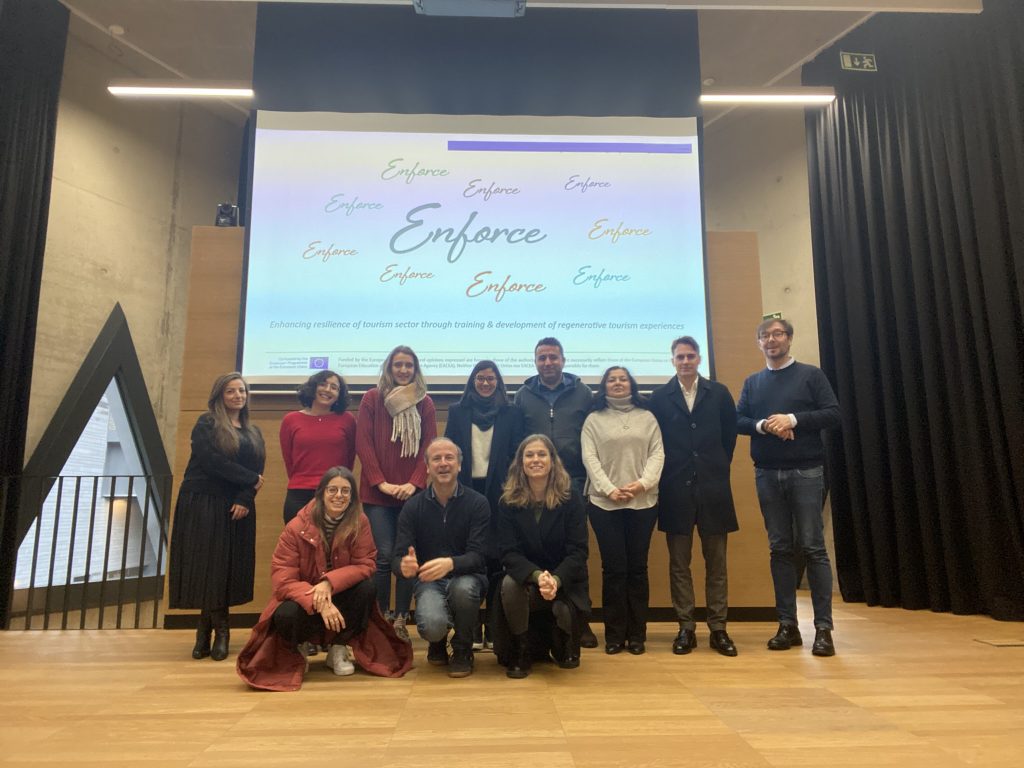
Project partners met in Aveiro on the 14th and 15th of September 2023. It was the perfect opportunity to visit the destination with regenerative glasses on, to understand its many assets but also some of the challenges the destination is facing. Face to face project meetings always provide the partners with the unique opportunity to learn about the work of the hosting partner and get valuable insights about the destination. In this case partners were hosted by the dedicated team of management and tourism professionals of the University of Aveiro who shared a wealth of insights about a city that was new to many of the participants.
The Enforce project is well on track when it comes to the project work plan, which means that after having completed the Best Practice collection of innovative examples about storytelling for regeneration and also the Storyteller’s Guide, partners used the meeting to discuss the development of the Enforce Training Programme.
For the next few months partners will be working on developing the content in line with guidelines provided by the University of Usak, our project partner from Turkey.
The course should be available for piloting in January/February 2024 and will also be available in the partner languages once all translations are finalised.
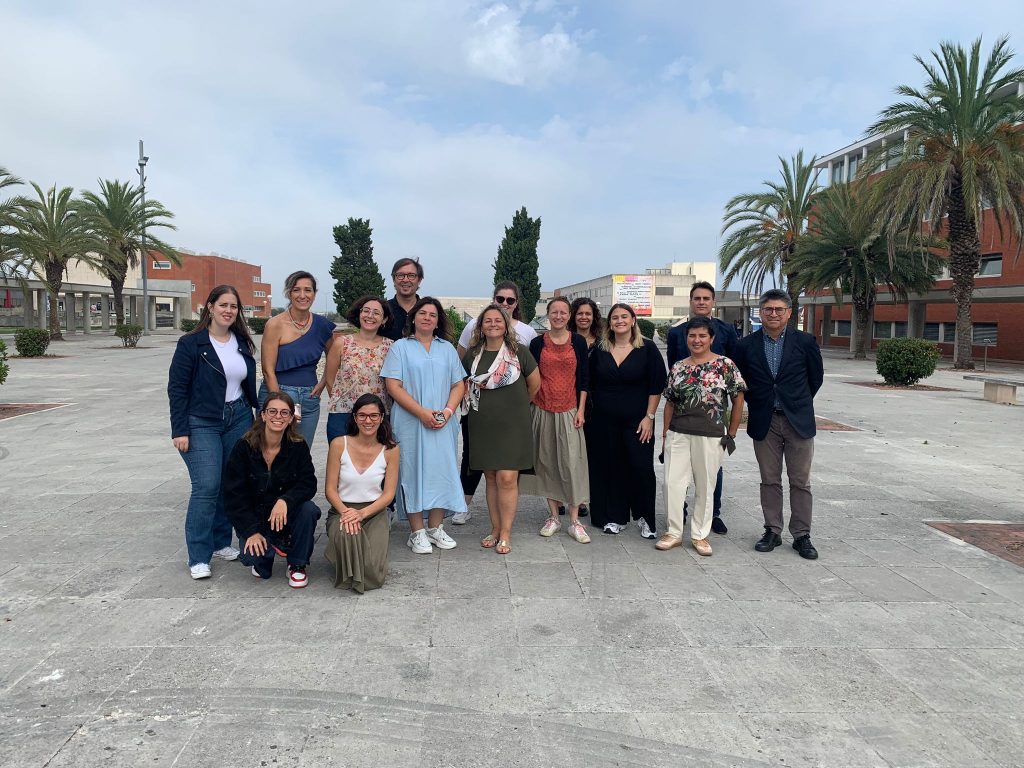
The ENFORCE team met in the beautiful city of Luxembourg for its kick-off meeting. It took place at the premises of the Italian Chamber of Commerce in Luxembourg (also known as CCIL), which opened its doors to warmly welcome all partners.
The team was aware of the importance of this first meeting and approached it with the same enthusiasm, as it plays an important role in building strong bonds that will contribute to the success of the entire cooperation. With the common goal of building a solid foundation, the participants discussed in depth the first steps required for the project ENFORCE.
During this visit, the project objectives were discussed in depth to ensure that each partner has a comprehensive understanding of the overarching goals. The outcome of the kick-off meeting was extremely satisfying for all partners and generated enthusiasm among the team. It was a success and left everyone inspired and energised.
The journey of ENFORCE has officially begun and with the collective expertise of the committed partners, there is no doubt that it will thrive and achieve remarkable results.
“The European Commission support for the production of this publication does not constitute an endorsement of the contents which reflects the views only of the authors, and the Commission cannot be held responsible for any use which may be made of the information contained therein”
Project N: 2022-1-LU01-KA220-VET-000089887


Select your desired language.